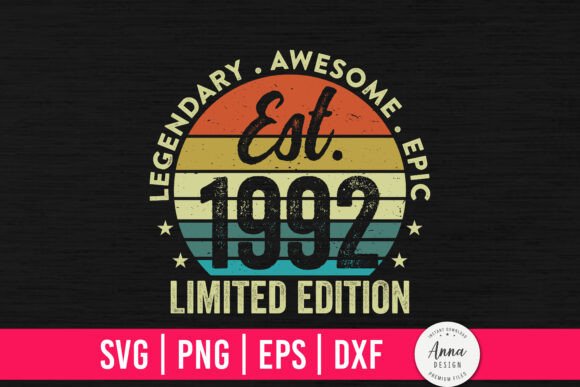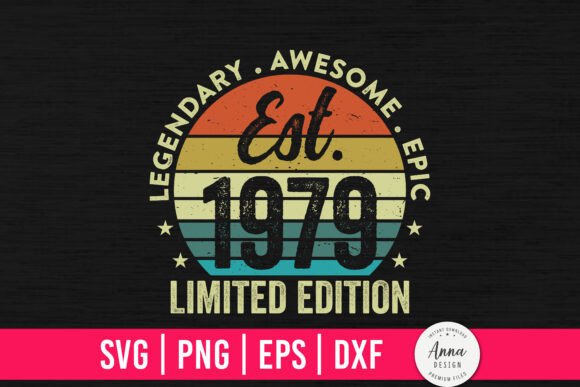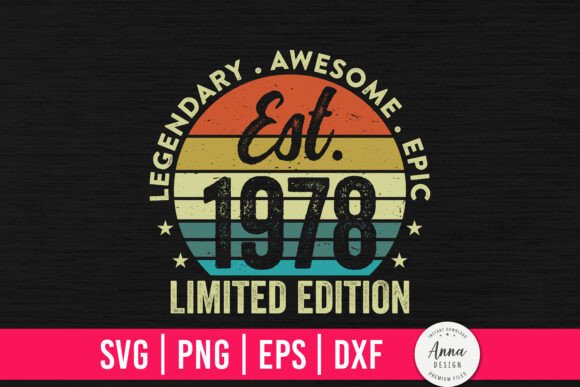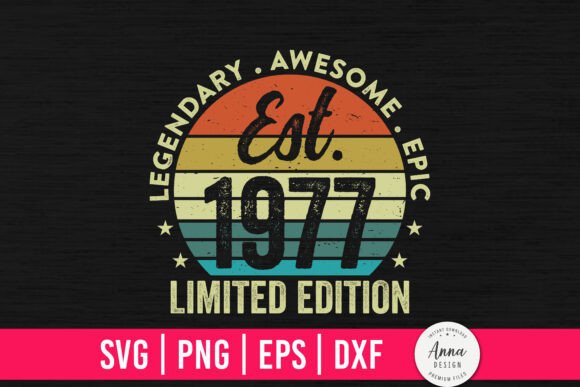
Est. 1975 Limited Edition 49th Birthday Review
When I first opened the file for Est. 1975 Limited Edition 49th Birthday, my immediate thought wasn't about the digital formats it came in, but rather how it would translate to thread. As someone who spends hours stabilizing fabrics and troubleshooting stitch density issues, my first impression is grounded in practical application. This design carries a specific mood: celebratory yet nostalgic, with a clean aesthetic that feels right at home on a vintage-style sweatshirt or a crisp white tote bag. It isn't just a graphic; it is a statement piece that demands careful execution to maintain its "limited edition" feel.
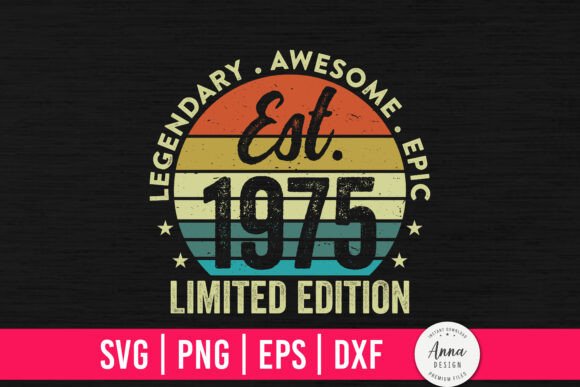
The layout of Est. 1975 Limited Edition 49th Birthday suggests a balanced approach to typography and visual weight. In the context of embroidery, where every pixel translates into thousands of needle penetrations, clarity is king. The design avoids unnecessary clutter, which is a massive plus for small hoop applications. However, the specific phrasing and the year placement require attention. If this is intended as an embroidery file rather than a simple cut file, the transition from vector paths to satin stitches must be smooth. Without proper conversion, the curves could become jagged, ruining the professional look of the finished product.
Real-World Application: The Custom Tote Bag Scenario
Let's walk through a realistic scenario. Imagine you are preparing a batch of custom embroidered tote bags for a local boutique's anniversary sale. You need something that screams "exclusive" without looking like a generic mass-produced item. This is where Est. 1975 Limited Edition 49th Birthday shines. The text has a natural rhythm that works well on canvas or cotton duck fabric.
When I visualized stitching this onto a heavy-duty tote bag, the design's potential became clear. The phrase "Limited Edition" adds a layer of perceived value that customers love. It transforms a standard gift into a collectible item. However, the success of this project hinges on your choice of thread colors. A metallic gold thread for the year "1975" against a navy blue background would create a stunning contrast, elevating the finished product significantly. Conversely, using a low-density fill stitch on a textured fabric might cause the design to sink into the weave, making the lettering hard to read.
For a handmade shop owner or an Etsy seller, this design offers a perfect opportunity to create a cohesive brand identity. Imagine selling these as part of a "Golden Anniversary" collection. The versatility allows you to pair this design with other assets, creating a line of coordinated products like matching aprons, kitchen towels, or even baby onesies. The key here is consistency. If you sell personalized gifts, the ability to replicate this design across different mediums builds trust with your buyers. They know exactly what they are getting when they see the familiar style of Est. 1975 Limited Edition 49th Birthday.
Navigating Fabric Challenges and Stitch Density
While the concept is strong, the execution requires technical precision. Not all fabrics play nice with every design. When working with Est. 1975 Limited Edition 49th Birthday, you must consider the fabric texture. On stretchy materials like jersey or thin knits, the tension required for a dense satin stitch can cause puckering. This is a common pitfall for hobbyists who rush the stabilization process. To avoid this, always use a high-quality cut-away stabilizer, especially if the garment will undergo frequent washing.
Dense stitch areas are another critical factor. If the design includes thick blocks of color or complex shading, the needle count can become excessive. High stitch density is great for durability but can make the fabric stiff and uncomfortable, particularly on baby clothing or delicate pillow covers. Before committing to a full production run, I strongly advise testing the design on scrap fabric. Check how the running stitch interacts with the base material and ensure that the fill stitch doesn't overwhelm the design elements.
There are also limitations to keep in mind regarding curved surfaces. Embroidering on caps or hats presents unique challenges due to the curvature. While Est. 1975 Limited Edition 49th Birthday might work well on a flat cap front, the distortion on a curved visor could alter the proportions of the text. Small details, such as tiny serifs or intricate lines, may disappear entirely if the hoop size is too large or the fabric is too loose. Always inspect small details under magnification before finalizing the digitization.
Strategic Placement for Maximum Impact
The placement of the design dictates its visual appeal. For custom apparel, the chest area is the most versatile spot. It works equally well on a men's polo shirt or a women's cardigan. However, for larger items like sweatshirts or blankets, you have more freedom to experiment with sizing. A larger version of Est. 1975 Limited Edition 49th Birthday on the back of a hoodie creates a bold statement, while a smaller version on the left chest maintains a subtle, sophisticated look.
In the realm of holiday gifts or wedding favors, the design's timeless nature makes it a safe bet. Unlike trendy graphics that fade quickly, a design centered around a birth year and a milestone age has longevity. It appeals to a wide demographic, from young adults celebrating their 40s to seasoned crafters looking for meaningful decor. For commercial embroidery projects, this design can serve as a reliable asset that meets client expectations for quality and professionalism.
Technical Considerations for Digital Product Sellers
If you are a digital product seller offering graphics or print templates, understanding the source material is crucial. The description mentions SVG, PNG, DXF, and EPS formats. While these are excellent for cutting machines like Cricut or Silhouette, converting them directly to machine embroidery files requires additional steps. You cannot simply upload an SVG to an embroidery machine; it must be digitized to include stitch types, directions, and density settings.
Before listing this as a commercial asset, verify the licensing terms. Does the purchase allow for unlimited sales of finished goods? Are there restrictions on the number of units produced? These questions are vital for protecting your craft business. Additionally, ensure that the design is compatible with the software you use for digitizing. Some formats convert better than others, and losing detail during the conversion process can ruin the integrity of Est. 1975 Limited Edition 49th Birthday.
Testing in black and white mockups is a smart move to evaluate the design's structure. This helps identify any areas where the stitch density might be too high or where the spacing between letters is insufficient. By simulating the final look digitally, you can catch potential errors before wasting expensive thread and fabric. This step is essential for maintaining brand consistency and ensuring customer satisfaction.
Final Thoughts on Design Integrity
Est. 1975 Limited Edition 49th Birthday is a design with character and purpose. It speaks to a sense of history and celebration, making it a valuable addition to any maker's toolkit. Whether you are creating personalized gifts for friends or building a robust inventory for your online store, this design offers a solid foundation. However, its success depends entirely on your technical skill and attention to detail.
Remember that the best embroidery results come from preparation. Use the right stabilizer, choose contrasting thread colors, and always test on scrap fabric. By respecting the nuances of the medium, you can transform a simple digital file into a tangible masterpiece. For those looking to elevate their handmade products and impress their clients, taking the time to properly execute this design is well worth the effort. It is not just about stitching a logo; it is about crafting a memory that lasts.