On My Way to Make Some Bad T-shirt
As a designer who has spent years turning digital files into tangible, stitched reality, I know that the difference between a good project and a great one often comes down to the design itself. Recently, I had the opportunity to evaluate a file titled On My Way to Make Some Bad T-shirt. At first glance, it falls under the category of T-Shirt Designs and Graphics, but my job isn't just to look at the image; it is to visualize how it translates from a screen to a needle. This review is not about marketing hype; it is about practical judgment for embroidery designers, small business owners, and crafters who need to know if this asset will hold up in the real world.
First Impressions: The Mood and Layout
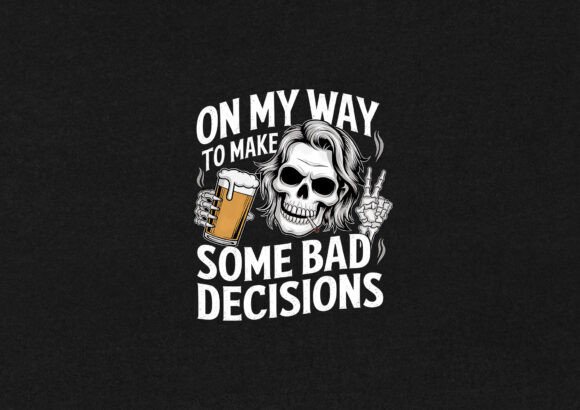
The immediate feeling of On My Way to Make Some Bad T-shirt is one of playful rebellion mixed with a touch of self-deprecating humor. The typography suggests a casual, perhaps slightly distressed or hand-lettered aesthetic that fits perfectly with modern streetwear and cottage-core trends. When you place this design on a mockup, it doesn't feel stiff or corporate. Instead, it feels like something a friend would wear to a coffee shop or a local maker's market.
The visual personality of the design is bold enough to stand out but simple enough to avoid overwhelming a garment. For an embroidery project, layout is everything. If the text is too cramped, the stitches will fight each other. If it is too loose, it might look lost on a tote bag or a baby onesie. Based on the provided dimensions of 4500×5400 pixels at 300 dpi, the resolution is excellent for high-quality printing and digitizing. This clarity ensures that when we convert this graphic into a machine embroidery design, the edges remain crisp, allowing for clean satin stitches along the lettering without unnecessary fuzziness.
Real-World Application: From Screen to Stitch
Let me take you through a specific scenario. Imagine you are preparing for a holiday gift season or launching a new line of boutique merchandise. You decide to create custom embroidered sweatshirts for a small team or a limited run of personalized gifts for Etsy customers. You pull the On My Way to Make Some Bad T-shirt design into your digitizing software. How does it perform?
In a real-life application, this design shines on medium-to-large surface areas. A heavyweight cotton sweatshirt provides the perfect stability for the stitches. The phrase has a natural rhythm that works well as a chest pocket placement or a centered back print. When executed correctly, the design adds a layer of personality that elevates a plain garment into a statement piece. It transforms a basic hoodie into a conversation starter.
I also considered its potential for smaller items. Could this work on a tote bag? Absolutely. The durability required for a canvas tote handles the density of a fill stitch well. What about a cap? That is where caution is needed. Curved surfaces like caps require careful tension adjustments. If the design is too wide, it will pucker at the seams. However, if scaled appropriately, the humor of the phrase could make for a fantastic, quirky accessory for a craft fair booth.
The versatility extends beyond apparel. I can easily envision this design on kitchen towels for a wedding gift, aprons for a cooking class, or even pillow covers for a nursery. The text is short enough to be read quickly, making it ideal for products where the message needs to be immediate. For a commercial embroidery project, this kind of relatable content often drives higher engagement because customers connect with the sentiment rather than just the object.
Where Caution is Required
While the design has strong potential, no single file is a magic bullet for every situation. There are specific contexts where On My Way to Make Some Bad T-shirt might struggle. First, consider the fabric texture. Embroidery relies on the thread biting into the material. On very thin fabrics, like a sheer summer blouse, the stabilizer requirements become complex, and the weight of the stitches might distort the fabric. Similarly, on stretchy knits without proper backing, the design could warp after washing.
Another critical factor is the hoop size. If you are working with a small hoop, such as one used for jewelry boxes or tiny patches, the full phrase might be too large to fit comfortably. In these cases, you might need to crop the design or reduce the scale, which could impact the legibility of the letters. Furthermore, dark fabrics present a challenge. If the original graphic is light-colored, you must ensure you have a contrasting thread color or a suitable underlay strategy to prevent the design from disappearing into the background.
Dense stitch areas are also a consideration. If the design relies heavily on fill stitches to create solid blocks of color, it may become stiff and uncomfortable against the skin. This is particularly important for baby embroidery projects, where softness is paramount. If the design is intended for a onesie, you must verify that the stitch density allows for flexibility. Finally, products that require frequent washing, like dish towels or work aprons, need robust stitching. If the design includes delicate decorative accents or tiny lettering, those details might fray over time if not anchored properly.
Visual Appeal and Product Value
When a customer receives a handmade product, their perception of value is tied directly to the quality of the finish. A well-executed On My Way to Make Some Bad T-shirt design signals professionalism. It shows that the seller put thought into the details. Conversely, a poorly digitized version with loose threads or puckered fabric can undermine trust in a brand. The design's clear structure helps mitigate this risk, provided the digitization is done right.
The phrase itself adds emotional value. It resonates with people who appreciate honesty and humor in their clothing. This makes it highly "giftable." Whether it is a birthday present for a creative entrepreneur or a thank-you gift for a client, the item carries a message that feels personal. For an Etsy seller, this kind of niche appeal can differentiate a shop from competitors selling generic patterns. It creates a connection that goes beyond the physical item.
Practical Designer Notes for Execution
If you are planning to use this design for a finished product, here is my professional advice based on experience:
- Test on Scrap Fabric: Never start on your final garment. Run a test on a scrap of the same material to check thread tension and fabric reaction.
- Check Thread Colors: Ensure the thread colors provide enough contrast against the fabric. Sometimes a design looks great on a white background but gets lost on navy blue.
- Review Stitch Density: High-density designs can cause fabric distortion. Lower the density if the fabric is lightweight or prone to stretching.
- Confirm Hoop Size: Verify that your hoop can accommodate the design dimensions without cutting off any essential parts of the text.
- Inspect Small Details: Zoom in on the digitized file to ensure there are no stray stitches or tiny elements that won't catch the needle.
- Stabilizer Selection: Use the correct type of stabilizer (cut-away, tear-away, or wash-away) based on the fabric's stretch and weight.
- Mockups: Create black and white mockups to see how the shape reads without color interference.
- Licensing Check: Before selling finished items or using the design in commercial projects, double-check the licensing terms associated with the Graphics package.
The file provided is a PNG, which is a raster format. While excellent for print-ready previews and digital assets, remember that for machine embroidery, you typically need a vector-based or specialized embroidery format (like .DST, .PES, or .EXP). If you are receiving only the PNG, you will need to trace or digitize the artwork yourself. This process requires skill to maintain the integrity of the original design.
Final Thoughts on the Design
On My Way to Make Some Bad T-shirt is more than just a collection of letters; it is a mood board waiting to be stitched. It offers a blend of humor and style that fits seamlessly into the current landscape of handmade products and small business merchandise. Whether you are creating custom apparel, personalized gifts, or boutique branding materials, this design has the potential to be a standout piece.
However, success lies in the execution. By paying attention to fabric choice, stabilizer usage, and stitch density, you can ensure that the final product matches the high standards set by the initial graphic. For designers looking to add a touch of wit to their portfolio, this is a solid addition. Just remember to respect the technical limitations of embroidery, and you will find that this design delivers both visually and commercially.